
Following the announcement by the Ministry of Education, Science and Technology regarding the adjustment of the 2026 national assessments and examinations schedule to prevent potential disruptions from anticipated El Niño rains in parts of the country, education stakeholders in Tanzania have commended the government for the decision, stating that it is a prudent step to take early precautions.
A section of stakeholders who spoke to this publication noted that these adjustments are appropriate, emphasizing that the safety and welfare of students, teachers, and the general community must remain a priority.
Speaking to this publication's reporter, the Coordinator of the Tanzania Education Network (TEN/MET), Ms. Martha Makala, stated that adjusting the examination schedule is a sound decision for child protection and safety, adding that education continues even after a child completes a specific stage of learning.
Similarly, Evena Massae, Director of the non-governmental organization COSUPED based in Dar es Salaam, Tanzania, told this publication that adjusting the examination schedule is a proper move because it is wise to take precautions—especially considering the state of school infrastructure in certain rural areas—rather than risking the lives of students, teachers, and other staff.
She further noted that, in reality, many rural roads are substandard and prone to severe degradation and impassability during heavy rainfall.
She added that, under such circumstances, adequate student preparation for the upcoming examinations must be prioritized to ensure effective and efficient administration, and students must be granted sufficient time to prepare.
In the same vein, the Director and Founder of the non-governmental organization Transforming Life (TL), Ms. Nashivai Mollel, speaking to this publication's reporter, stated that from her perspective as an education stakeholder, she welcomed the changes with the understanding that the safety and well-being of students, teachers, and the broader community must take precedence. Given that El Niño rains can cause transport disruptions, affect attendance, or compromise a secure testing environment, it is critical for authorities to adopt proactive measures.
She emphasized that it is equally crucial to ensure these modifications do not induce additional stress on students or disrupt their preparations.
“For candidates sitting for their final exams, my advice is to continue utilizing this time constructively: review key topics, practice past examination papers, and reach out to teachers whenever assistance is needed. Teachers should also remain accessible to students, provide academic and emotional guidance, and ensure that learners receive accurate information regarding the schedules and examination logistics,” stated Ms. Nashivai Mollel.
Furthermore, she reiterated that the safety of students, teachers, and the community is the primary priority; hence, she fully endorses and supports the government's decision.
Additionally, Mr. Nicodemas Etlawe, Executive Director of Maarifa ni Ufunguo NGO, Arusha, told this publication that revising the examination schedule is a commendable decision driven by the objective to avert severe consequences for students and teachers.
“However, there are critical considerations to address: Have teachers covered the entire curriculum? Has NECTA been provided with sufficient time to formulate the examinations?” remarked Mr. Etlawe.
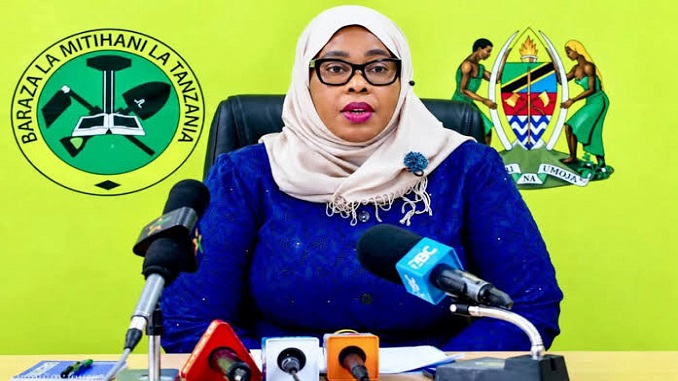
The announcement regarding the revised schedule for the 2026 national assessments and examinations was delivered in Dar es Salaam on September 25, 2026, by the Deputy Minister for Education, Science and Technology, Hon. Wanu Hafidh Ameir. She stressed that the measure was taken after the Government closely monitored meteorological reports and evaluated the potential impact on the administration of national assessments and examinations.
She stated that according to official forecasts by the Tanzania Meteorological Authority, there is a probability of strong El Niño events, with rainfall expected to commence in some regions by October 2026 and intensify significantly in November 2026—conditions that could hinder transportation and access to various examination centers.
She explained that in consideration of the country's geography and the susceptibility of certain areas to flooding, transit challenges, and other weather-related disruptions, the Ministry, in collaboration with the National Examinations Council of Tanzania (NECTA), revised the timetable for national assessments and examinations.
According to the revised schedule, the Standard Two National Assessment (School Level) will take place from October 7 to 8, 2026, while the Standard Four National Assessment will be conducted on October 5 and 6, 2026.
Furthermore, the Form Two National Assessment will be held from October 12 to 23, 2026, while the Form Four National Examinations will proceed from October 19 to November 6, 2026.
She stated that these adjustments aim to safeguard the security of students, teachers, invigilators, education officials, and other stakeholders involved in exam administration, as well as to protect examination materials, equipment, and vital documents.


Be the first to comment