
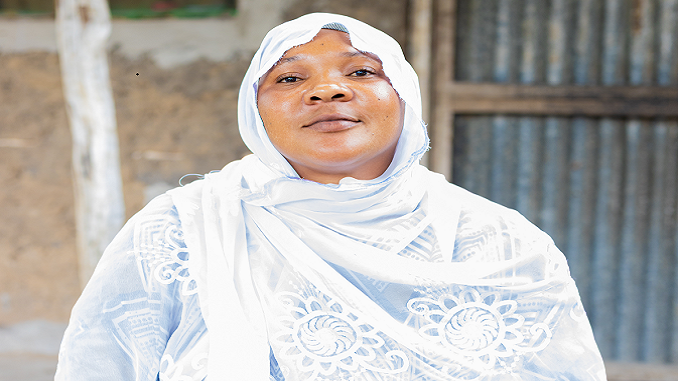
By Greyson Mgoi
Watende Ramadhani Botea, a resident of Makulunge Village who is also the School Committee Chairperson of Migiro Primary School located in Makulunge Ward, Bagamoyo District, Coast Region, states that the Life Skills and Values training he received from Uwezo Tanzania has transformed him significantly and helped him nurture and guide his children to develop effectively while acquiring essential competences and life skills.
Watende states that before undergoing this training, he did not know the meaning of Life Skills. Following the training provided under the Action for Life Skills and Values in East Africa (ALiVE) project, he has come to understand that life skills are enabling competencies that help an individual navigate diverse day-to-day situations.
He notes that the Life Skills training has broadened his understanding of various competencies, such as communication and effective collaboration with others in the community, as well as enhancing his problem-solving capabilities when challenges arise.
Citing the Problem-Solving skill as an example, he explains that he has learned the necessity of following systematic steps to address a challenge accurately. The first crucial step, he notes, is recognizing the problem itself before considering different approaches to resolve it.
He explains that after mastering these critical competencies, including problem-solving, he is now able to assist his children in cultivating problem-solving skills and instilling resilience and self-confidence in them. He emphasizes that this skill is essential in enabling a child to tackle diverse challenges encountered in life.
“I also had the opportunity to share the life skills and values training I received with my peers during village meetings, and indeed, many parents showed keen interest in this knowledge,” Watende states.
Watende calls on other parents to support their children in developing these critical skills, emphasizing that life skills are beneficial and significantly aid in effective parenting.
Elaborating on the Life Skills and Values training—particularly problem-solving—he stated that parents and guardians were instructed to take the following steps to foster problem-solving skills in children: allowing children to resolve their own problems (for example, when a child presents a challenge, asking them how they might solve it rather than doing it for them); encouraging children to gather more information regarding the issue; guiding them to use available information to propose alternative solutions; assisting them in assessing which approach would resolve the issue most effectively; and encouraging them to test that approach and, if unsuccessful, evaluate why and identify alternative strategies.
Appealing to the community and the government, Watende urged that this education reach everyone—both parents and children—noting that it proved highly beneficial to him and to more than 40 other parent champions trained in Bagamoyo District who subsequently disseminated the knowledge to other parents.
“My appeal to the government and the community at large is that life skills and values education is essential for everyone. I recommend that everyone acquire this knowledge and, where feasible, that all children be taught these skills both at school and at home,” Watende emphasized.
According to the implementation report (2025) of the ten-week Problem Solving campaign executed under the Life Skills Project by the organization Uwezo Tanzania in collaboration with its partner organizations OCODE (Bagamoyo), Milele Zanzibar (Zanzibar), and SAZANI Trust (Zanzibar), the primary objective of the campaign was to strengthen parental and community engagement in fostering problem-solving and life skills among children and youth through a ten-week national campaign, as well as to cultivate a culture of inquiry, creativity, resilience, and lifelong learning.
Alongside the primary objective, the specific objectives of the campaign included: encouraging parents and communities to foster children’s curiosity and questioning skills to enhance critical thinking; integrating age-appropriate, practical activities at school and at home to help children apply problem-solving skills in real-world contexts; and promoting creative thinking through arts, games, and innovation to build children’s confidence and capacity to generate alternative solutions.
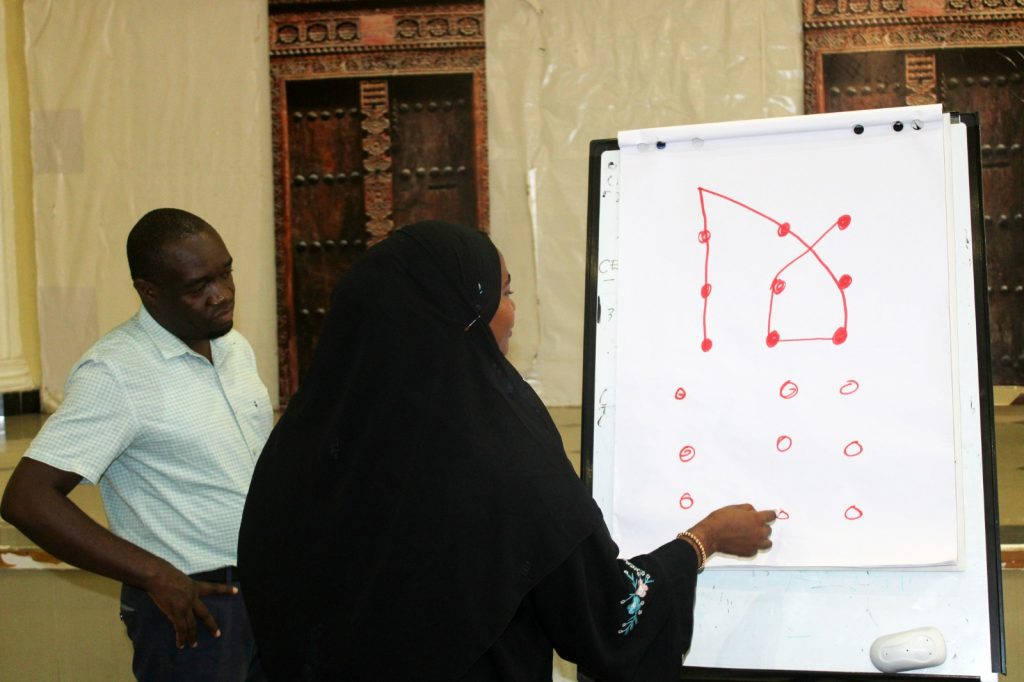
Participants (Parent Champions) undergoing training on problem-solving skills—facilitated by Life Skills and Values Project officers in Zanzibar.
The report indicates the scope of stakeholders reached and impacted by the campaign. In Zanzibar, the initiative directly reached 3,144 individuals (1,063 men and 2,081 women), actively engaging 949 parents, 1,917 students, 193 teachers, 5 headteachers, 30 religious leaders, 13 community leaders/champions, 5 local government officials, and 32 youth volunteers. Additionally, 2,607 parents (1,115 men and 1,492 women) were reached indirectly, demonstrating substantial dissemination of the message at the household level beyond the primary target group.
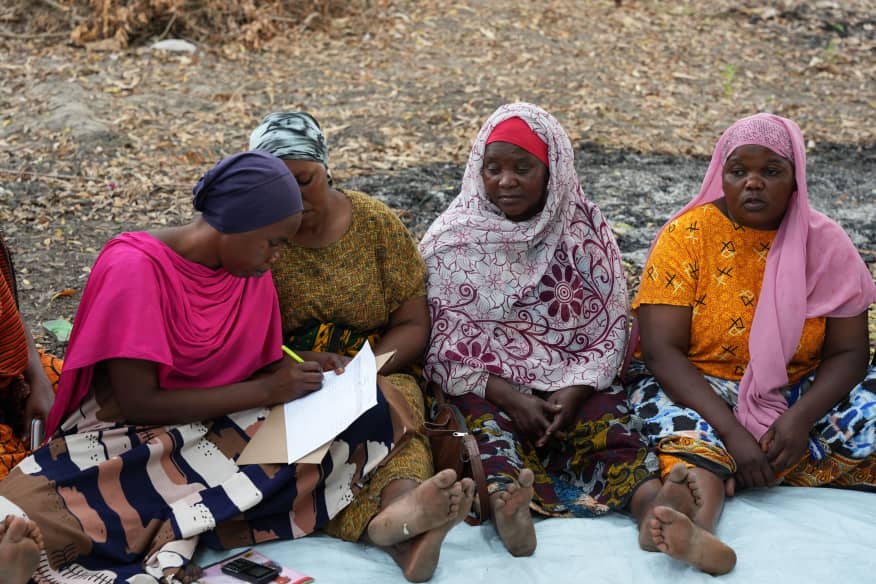
Concurrently, in Bagamoyo, 1,464 parents were sensitized, along with at least 40 pupils from Nianjema Primary School, 54 vocational training students from Baqwina Commercial College, 92 members of community savings groups, and 239 congregants across religious institutions, with over 15,000 community members reached through radio, television, and other media broadcasts.
Regarding the outcomes observed following the campaign's implementation, behavioral changes among parents included: improved family communication, with parents actively involving children in collaborative discussions regarding family matters; enhanced communication among family members; and the adoption of positive discipline practices, shifting from punitive measures to positive guidance, thereby providing space for children to ask questions and share their perspectives.
In addition to these developments, parents demonstrated increased attendance at parent-teacher meetings, monitored academic progress more closely, sought strategies to enhance their children's learning outcomes, and provided greater support for learning within the home.
Furthermore, the report highlights positive behavioral changes among students following the campaign, including: heightened curiosity and critical thinking, evidenced by a stronger inclination toward inquiry and confident engagement with reading and analytical materials both at school and at home; improved school attendance resulting from reduced absenteeism and tardiness; and enhanced self-expression, creativity, and problem-solving abilities among students.
According to Dr. Daniel Marandu, a psychology expert from the University of Dar es Salaam, psychological evidence indicates that as children grow, they require foundational skills and knowledge to navigate diverse life challenges effectively.
Dr. Marandu emphasizes that these capabilities constitute life skills. He notes that children with well-developed life skills possess a substantially higher likelihood of succeeding in life compared to those with lower proficiencies.
Similarly, Mwanahamisi Jokolo, a curriculum specialist from the Tanzania Institute of Education (TIE), noted in 2025 during an engagement with Uwezo Tanzania experts documenting the Life Skills project outcomes that the strong collaboration between TIE and non-governmental organizations serves as a solid foundation for continuing joint efforts to promote life skills and values among students, emphasizing the fundamental importance of these skills for children.
Through the Life Skills and Values Project, Uwezo Tanzania and its partner organizations have collaborated closely with the government—via the Ministry of Education (Tanzania Mainland and Zanzibar), the Tanzania Institute of Education (TIE), and related departments—to ensure the integration of life skills into the revised curriculum and to provide educators with the requisite training to nurture these skills in students.
A 2015 research report by the Inter-University Council for East Africa indicates that while many university graduates possess technical competencies, they often lack the foundational skills required to apply that knowledge effectively in workplace environments. The study revealed that numerous employers found graduates lacking in communication, creativity, self-awareness, problem-solving, and critical thinking skills, hindering their employment prospects. Approximately 6 out of 10 graduates (61 percent) in Tanzania lacked these critical skills, resulting in reduced employability.
These findings underscore the critical role of parents and educators in establishing and nurturing life skills and values during developmental stages and basic education, yielding long-term benefits for society.
Furthermore, a 2022 study conducted by the Action for Life Skills and Values in East Africa (ALiVE) project indicated that formal schooling contributes significantly to the development of life skills. Youth in higher education levels (secondary education) demonstrated higher proficiencies in life skills compared to those in primary education.
These research findings have informed educational reforms, prompting the government to review the curriculum and prioritize competency-based and life skills development across the education system. This initiative aims to foster civic responsibility, enhance youth problem-solving capacities through applied learning, and address the national challenge of youth unemployment.
Given the critical role of life skills in developing responsible citizens capable of generating and sustaining employment opportunities, the government has reviewed and updated its curriculum to prioritize life skills within the revised educational framework.
The revised curriculum, rolled out in January 2024, prioritizes five core life skills integrated across various subjects: critical thinking, problem-solving, communication, and collaboration.
Through these reforms, education is structured to equip learners to apply academic competencies to real-world situations, such as fostering positive social relations, navigating employment challenges, collaborating effectively across diverse communities to drive economic growth, and promoting societal peace.
Key questions to consider: As a parent, what steps are you taking to help your child develop these essential life skills? What insights have you gained from this article? Share your feedback by sending a message to this publication.

Be the first to comment